Our Tea Process
Discover the craft, care, and expertise behind every exceptional cup of Ceylon tea.

Discover the careful journey behind every cup of our Ceylon tea, from the hands of Sri Lankan farmers and the lush tea gardens to skilled processing, grading and packing. Every stage is carried out with care and precision to preserve natural quality, authentic flavour and freshness, while honouring the distinctive character and heritage of Ceylon tea.
From the heart of Sri Lanka, coming soon to the Emirates.

="timeline-item"
Stage 1 - Harvesting and Collection

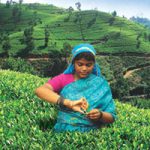
The journey begins in the tea gardens of Sri Lanka, where skilled workers carefully handpick the finest young leaves and buds. Traditionally, the two tender leaves and the bud are selected, as these young shoots contribute to the distinctive flavour, aroma and character of Ceylon tea.
Tea leaves are typically harvested every 5 to 8 days, depending on growing conditions and the maturity of the leaves. Handpicking allows only the most suitable leaves to be selected, helping maintain consistency and quality.
Once harvested, the fresh leaves are promptly transported from the fields to the factory. This swift transition is essential to preserve freshness and ensure the leaves are in the best possible condition for processing.
="timeline-item"
Stage 2 - Withering

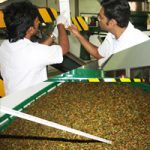
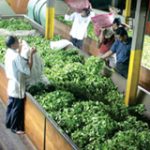
At the factory, the freshly harvested leaves are weighed and carefully spread across withering troughs. Controlled airflow is circulated through the leaves, gradually reducing moisture and allowing natural physical and chemical changes to take place.
Over approximately 10 to 14 hours, the leaves become softer and more flexible, developing the ideal texture for the next stage of production.
This carefully controlled process is essential to preparing the leaves for rolling while helping preserve their natural qualities.
On average, approximately 100 kg of fresh tea leaves produces around 22–25 kg of finished tea.

="timeline-item"
Stage 3 - Rolling

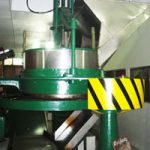
Once the leaves have reached the desired level of withering, they are carefully rolled to twist and curl the leaves while gently rupturing their cells.
Rolling plays an important role in developing the character of the finished tea. The process is generally carried out in several stages, with each rolling period followed by roll breaking and sieving to separate the leaves according to size.
As the leaf cells are broken, naturally occurring enzymes come into contact with oxygen. This begins the oxidation process that gives black tea its characteristic colour, aroma and flavour.

="timeline-item"
Stage 4 - Fermentation/Oxidisation

Following rolling, the tea leaves are carefully spread under controlled conditions to allow oxidation to take place.
During this stage, natural enzymes within the leaves react with oxygen, gradually transforming the green leaves into the rich coppery-brown colour associated with black tea. The developing aroma and colour are closely monitored by experienced tea makers to determine when the oxidation process has reached its desired level.
Often referred to as fermentation, this stage is more accurately described as oxidation. It is one of the most important stages in shaping the distinctive character, aroma and flavour of the finished tea.

="timeline-item"
Stage 5 - Firing & Baking

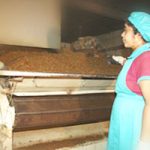
Once the desired level of oxidation has been achieved, the tea leaves pass through a controlled drying process.
Hot air is carefully circulated through the leaves to stop further enzymatic activity and stabilise the tea. This process also reduces the moisture content to approximately 2–3%, helping protect the tea during storage and preserve its freshness, aroma and flavour.

The balance of temperature, airflow and drying time is carefully controlled to ensure the tea reaches the desired quality.

="timeline-item"
Stage 6 - Sorting & Grading

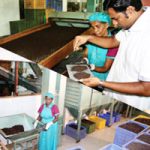
After drying, the tea is carefully sorted and graded according to the size and appearance of the leaves.
The dried tea passes through a series of vibrating screens that separate the leaves into different grades. These grades describe the size and appearance of the tea particles rather than indicating their quality.

Different grades can produce different characteristics in the cup. Broken-leaf grades generally produce a stronger, darker liquor, while larger leaf grades tend to produce a lighter liquor.

Once sorted and graded, the tea is carefully weighed and packed into protective packaging designed to preserve its quality and freshness.

="timeline-item"
Stage 7 - Packing

The journey of our Ceylon tea continues beyond careful sorting and grading. Every batch is packed with the same care and attention to quality that goes into its production.

The finished tea is carefully weighed, packed and protected to help preserve its natural character, aroma, flavour and freshness from the factory to your cup.

Every package is handled with care, reflecting our commitment to maintaining the authentic taste and quality of Ceylon tea.
From the tea gardens and skilled hands of Sri Lankan tea makers to your table, we take pride in preserving not only the tea itself, but also the craftsmanship, values and heritage behind every leaf.

Carefully crafted. Naturally preserved. Authentically Ceylon.

Back to top of page